 chapter
Chapterwise retirement guide
The Number That Isn't Really a Number
Headlines say you need over a million to retire. Here's why that number is an average, not a target, and what actually matters for your plan.

Every year, a headline makes the rounds: this is how much you need to retire comfortably. The figure climbs a little most years, lands somewhere north of a million, and gets repeated everywhere until it starts to feel like a universal truth. For a lot of people, especially those still decades from retirement, that number does something unhelpful. It turns an entire life's worth of planning into a single, distant, faintly terrifying finish line.
It's worth taking a closer look at what that number actually is, and isn't.
Where the number comes from
These widely quoted figures are usually averages, sometimes surveys of what people believe they'll need, sometimes rough models built on national averages for spending, life expectancy, and investment returns. They're not wrong, exactly. They're just answering a different question than the one most people hear.
The number answers "what would an average person, spending an average amount, living an average number of years, need to have saved." Almost nobody actually lives that average life. Where you live, what your home costs look like, whether you'll have a pension or government benefits layered in, what your health looks like, how you actually want to spend your time, all of it shifts the real number for you specifically, sometimes by hundreds of thousands of dollars in either direction.
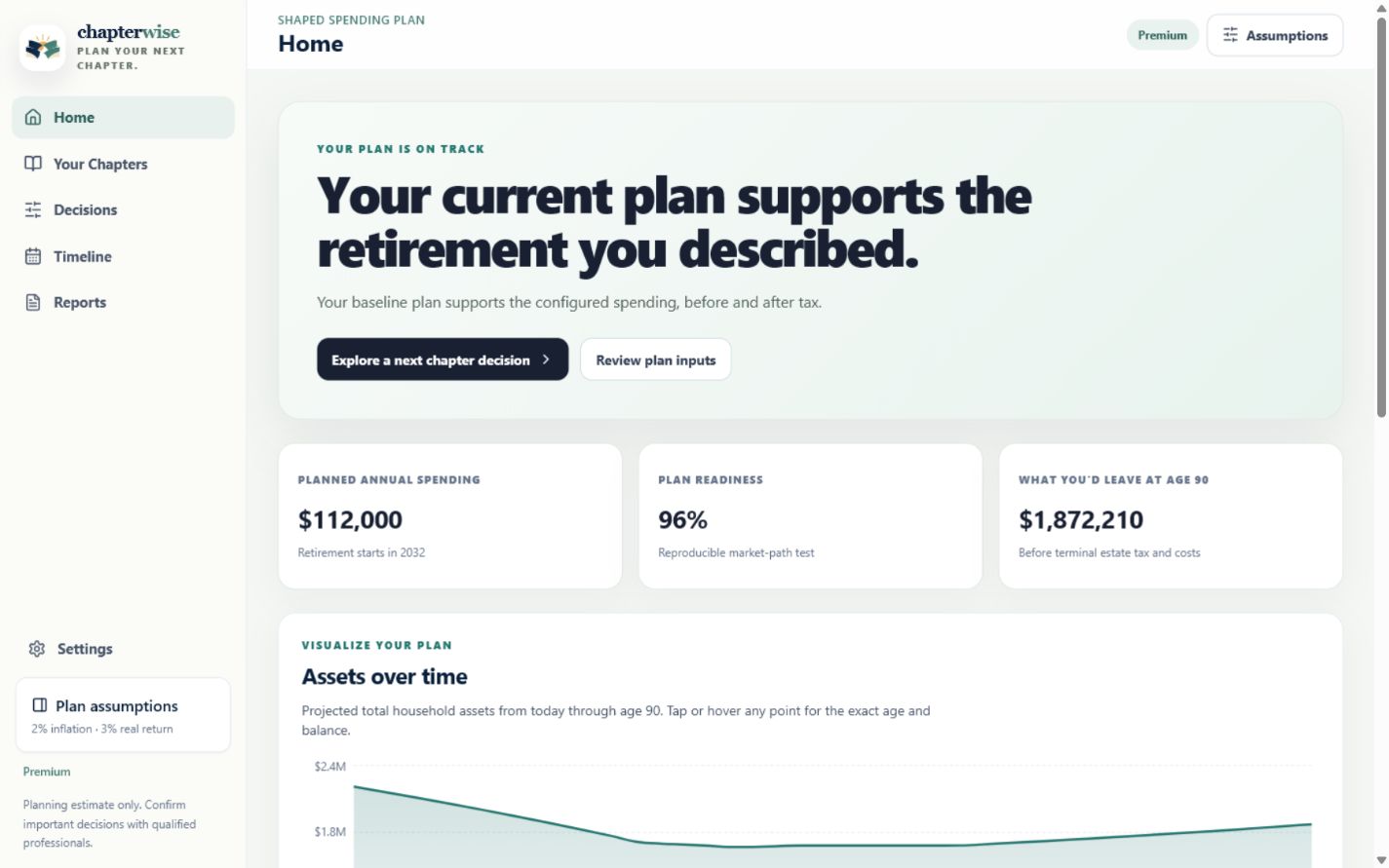
Why the headline number backfires
For someone early in their saving years, a number like this tends to produce one of two unhelpful reactions. Either it feels so far away that saving seems pointless, why bother contributing a modest amount now when the target is seven figures away. Or it creates a vague, low-grade anxiety that never quite resolves, because a number with no plan attached to it isn't something you can actually work toward. It's just something you can worry about.
Neither reaction is useful, and neither reflects how retirement planning actually works in practice.
A smaller first step
Try the decision before you sign up
This directional preview reuses the same illustrative logic as the homepage. It is not a recommendation or a personalized projection.
What actually matters more than the number
A real plan isn't built around a single headline figure. It's built around your own picture of the life you're saving toward, and worked backward from there.
- Your own spending, not an average one. What you'll actually need month to month in retirement is closer to your current spending than to a national average, adjusted for things that change, no more commuting, potentially a paid-off home, possibly higher healthcare costs later on.
- What's already layered in. CPP, OAS, a workplace pension if you have one, these all reduce what your personal savings actually need to cover. A number that ignores them is measuring the wrong thing entirely.
- A direction, not a deadline. Retirement savings work through consistent contributions over time, not through hitting a specific figure by a specific date. Progress is progress, whether the total industry benchmark says you're "on track" or not.
Writing your own number
The headline figure isn't wrong to exist, it's just not personal, and retirement planning only really works when it's personal. Your own number, built around your own life, is almost always more useful, and usually a lot less frightening, than the one making the rounds in the news this year.
If you're early in this story, the number worth focusing on isn't the one everyone else is quoting. It's simply: are you saving consistently, and does your plan reflect the life you're actually building toward. That's a question you can answer today, in a way a seven-figure headline never quite lets you.
This article is for general educational purposes and describes common patterns in retirement savings benchmarks. It isn't personalized financial advice; your own retirement savings target depends on your individual circumstances and is worth working through with a plan rather than a single published figure.