 chapter
Chapterwise retirement guide
Doing Everything Right Isn't the Same as Doing It in the Right Order
Leaving your RRSP untouched until 71 can mean a bigger tax bill later. Here's how strategic early withdrawals can lower your lifetime taxes.

Every so often, a real retirement case study makes the rounds, the kind newspapers publish with real numbers attached: a couple in their mid-60s, no debt, a paid-off home, healthy savings, one modest workplace pension, and a retirement spending goal well within reach. On paper, it reads like a success story with nothing left to figure out.
A recent case like this ran in a major Canadian paper's retirement advice column. A couple in their 60s, a combined net worth north of $3 million, a mortgage-free home, a modest defined benefit pension for one of them, part-time consulting income for the other, and a retirement spending target of $75,000 a year, comfortably below what their assets could support. The financial planner reviewing their situation opened with something close to a compliment: they'd done many things right, and their spending goal was modest relative to what they'd built.
And then came the more interesting part of the review, the part that's worth its own chapter, because it applies to a lot more people than just this one couple. Having enough isn't the whole plan. How and when you draw it out matters almost as much as how much you saved in the first place.
The instinct that quietly costs people money
Most of what this couple had saved sat inside RRSPs and locked-in accounts, the kind of registered savings that grow tax-deferred and get taxed as income only once withdrawn. The natural instinct, reinforced by decades of "let it grow as long as possible" advice, is to leave that money untouched for as long as the rules allow, taking only what's mandatory, and only once mandatory withdrawals actually begin.
That instinct isn't wrong exactly. It's just incomplete. RRSPs must convert to a RRIF, or an equivalent income product, by the end of the year you turn 71, and once that happens, mandatory minimum withdrawals begin the following year and climb steadily with age. If those accounts have kept growing untouched the whole time, the mandatory withdrawals land on a much larger balance, at exactly the same time CPP and OAS income (and, for this couple, a workplace pension) are also landing in the same tax year. Suddenly, income that felt comfortable on paper gets pushed into tax brackets nobody planned for, and depending on the numbers, can start triggering a clawback on OAS itself.
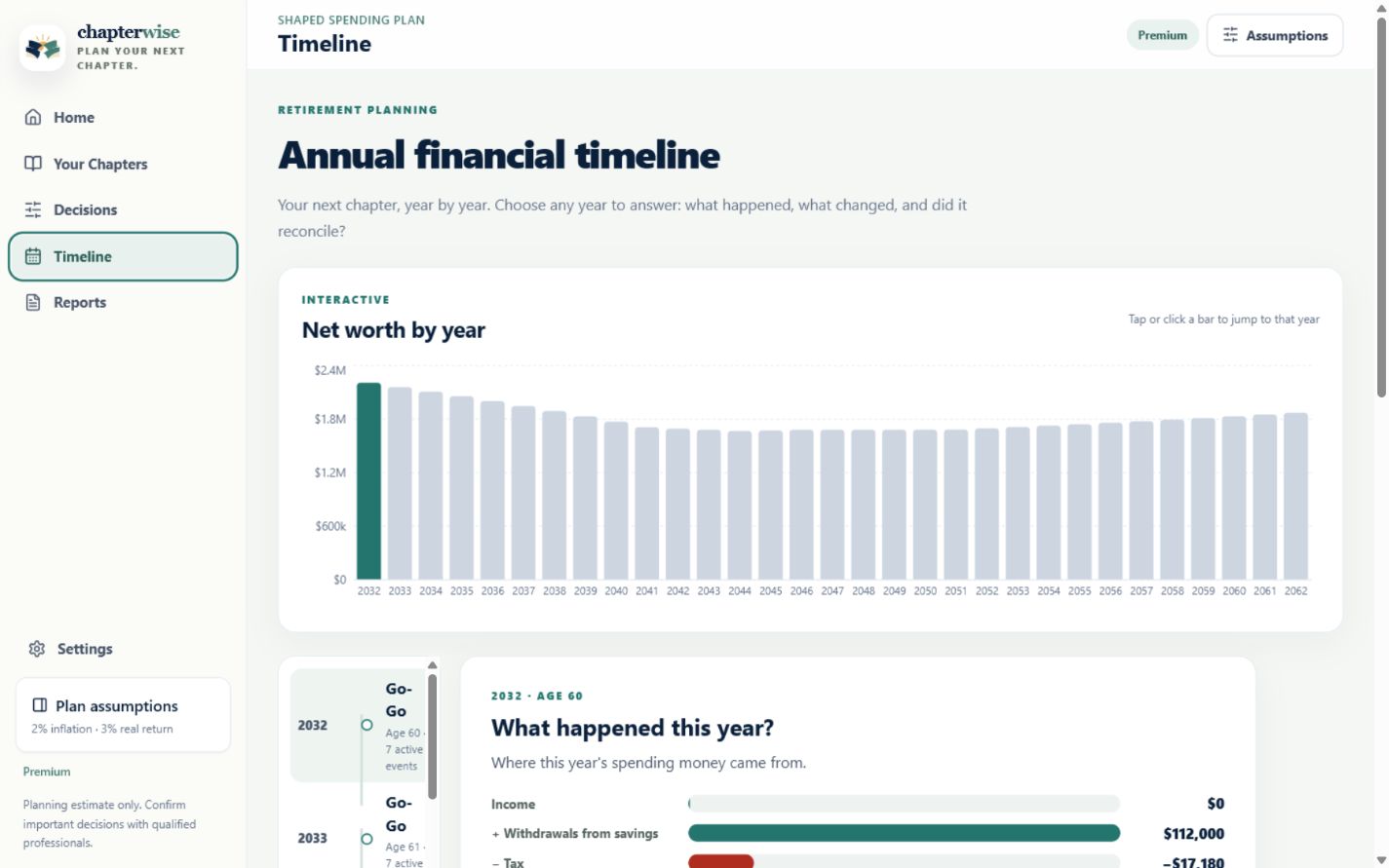
The window almost nobody uses on purpose
Here's the detail that made the biggest difference in this couple's case, and it's a detail that applies to a huge number of people in a similar position: the years between when you retire and when CPP and OAS actually start are often the lowest-income years of the entire retirement. If you can afford to delay those government benefits, waiting until 70 for a larger, permanently higher payment, that gap gets even wider, and even more valuable.
This couple was planning to delay both CPP and OAS to age 70, a strategy their planner supported given their health and financial position. That decision, on its own, creates exactly the kind of low-income window that registered account withdrawals are built to take advantage of. Rather than leaving the RRSPs and locked-in accounts untouched during those years, the recommendation was to start converting a portion early and drawing them down deliberately, using the years before CPP and OAS begin to withdraw at a lower tax rate than the couple would otherwise face once every income source is running at once.
This approach has a name in financial planning circles: sometimes called an RRSP meltdown, sometimes just early or strategic drawdown. The idea is simple even when the execution takes real planning. Fill your lower tax brackets deliberately in the years when your income is naturally low, rather than letting the government fill them for you decades later when your income is naturally high.
Why this isn't just a math exercise
A few compounding benefits show up once accounts convert earlier than the mandatory deadline, beyond just the immediate tax rate on each withdrawal:
- Income splitting becomes available sooner. Once registered savings are converted to a RRIF, up to 50% of that income can be split with a spouse for tax purposes, no money actually changes hands, just how it's reported. Converting at 65 instead of waiting until 71 makes this available for six additional years, which for a couple with uneven incomes, as many are, can mean real, ongoing tax savings every single year it's used.
- A smaller balance later means smaller forced withdrawals later. Every dollar drawn down deliberately in the low-income bridge years is a dollar that isn't sitting in the account compounding into an even larger mandatory withdrawal once RRIF rules take over in your 70s.
- It protects OAS from being clawed back later. A large, untouched RRSP that suddenly converts into a big RRIF at 71, stacked on top of CPP and OAS, is a common way retirees accidentally cross into OAS clawback territory in their 70s and 80s, even after spending decades in a modest tax bracket. Spreading the withdrawals earlier, while income is naturally lower, reduces that risk considerably.
None of this is a reason to distrust the basic plan this couple had built. It's a reason to sequence it deliberately rather than defaulting to the passive version of the same plan.
A smaller first step
Try the decision before you sign up
This directional preview reuses the same illustrative logic as the homepage. It is not a recommendation or a personalized projection.
The part that doesn't show up in a spreadsheet
Worth noting too: this couple, like a lot of people in this stage of life, still had an adult child living at home. It didn't change the core financial math much given the size of their assets, but it's a reminder that even a genuinely strong financial position rarely arrives without some other chapter still quietly unfolding alongside it, a family situation, a part-time income that may or may not continue, a health consideration that could shift the whole delay-to-70 calculation. A real plan holds room for all of it, not just the account balances.
The real lesson in this chapter
The headline of a story like this is usually "couple has enough to retire," and that's true as far as it goes. But the more useful lesson, the one worth carrying into your own plan, is that having enough and using it well are two different achievements. The couple in this story hadn't done anything wrong by defaulting to the standard advice. They just hadn't yet asked the more specific question: given exactly when our income sources start and stop, what's the smartest order to draw from what we've built?
That's a question worth asking regardless of the size of the numbers involved. It's not really about being wealthy enough to need sophisticated planning. It's about recognizing that a retirement plan isn't one number to hit. It's a sequence, with a shape, and the shape is often where the real value gets found or lost.
This article is inspired by a real case profiled in a major Canadian newspaper's retirement advice column, with details generalized and rounded for illustration rather than reproducing the specific profile. It is for general educational purposes and reflects RRSP, RRIF, and drawdown strategy rules believed accurate as of 2026. It isn't personalized financial or tax advice; whether early drawdown, income splitting, or delaying CPP and OAS makes sense for your own situation depends on your specific numbers, health, and goals, and is worth working through with a qualified planner.
Related chapters in this series
- When Does This Chapter Begin?
- The Chapter Where Saving Turns Into Spending
- "Are You Done?" Isn't a Yes or No Question