 chapter
Chapterwise retirement guide
The Second Act You Didn't See Coming
Some retirees don't stop working, they just change the terms. Here's how to plan the financial side of a second-act or encore career.

Retirement used to mean one clean break: work stops, leisure begins. That's still true for plenty of people, and there's nothing wrong with it. But for a growing number of others, the story doesn't end when the primary career does. It just changes genre.
When retirement isn't the end of working
Some people reach the point where they could stop working entirely and choose not to, not because they have to, but because they want a different relationship with work than the one they had for the last thirty years. Less pressure. More choice. Work that pays less but means more, or work that finally lets a long-parked interest take center stage.
This isn't the same as staying in your old job a little longer. It's a genuine second act: a consulting practice built on decades of expertise, a small business that was always a someday idea, part-time work in a field you actually find interesting, or simply picking up a skill you never had time for and seeing where it leads.
Why this chapter deserves its own planning
A second act changes the financial picture in ways worth thinking through deliberately. Income might continue, just smaller and more flexible, which changes how much you need your savings to cover and when. Benefits, insurance, and tax situations can shift depending on how the new work is structured. And there's a timing question too: does this chapter start immediately after the first career ends, or after a deliberate pause in between.
None of these questions have a universal right answer. They're personal, and they're worth working through before the second act begins, not improvised once it's already underway.
A smaller first step
Try the decision before you sign up
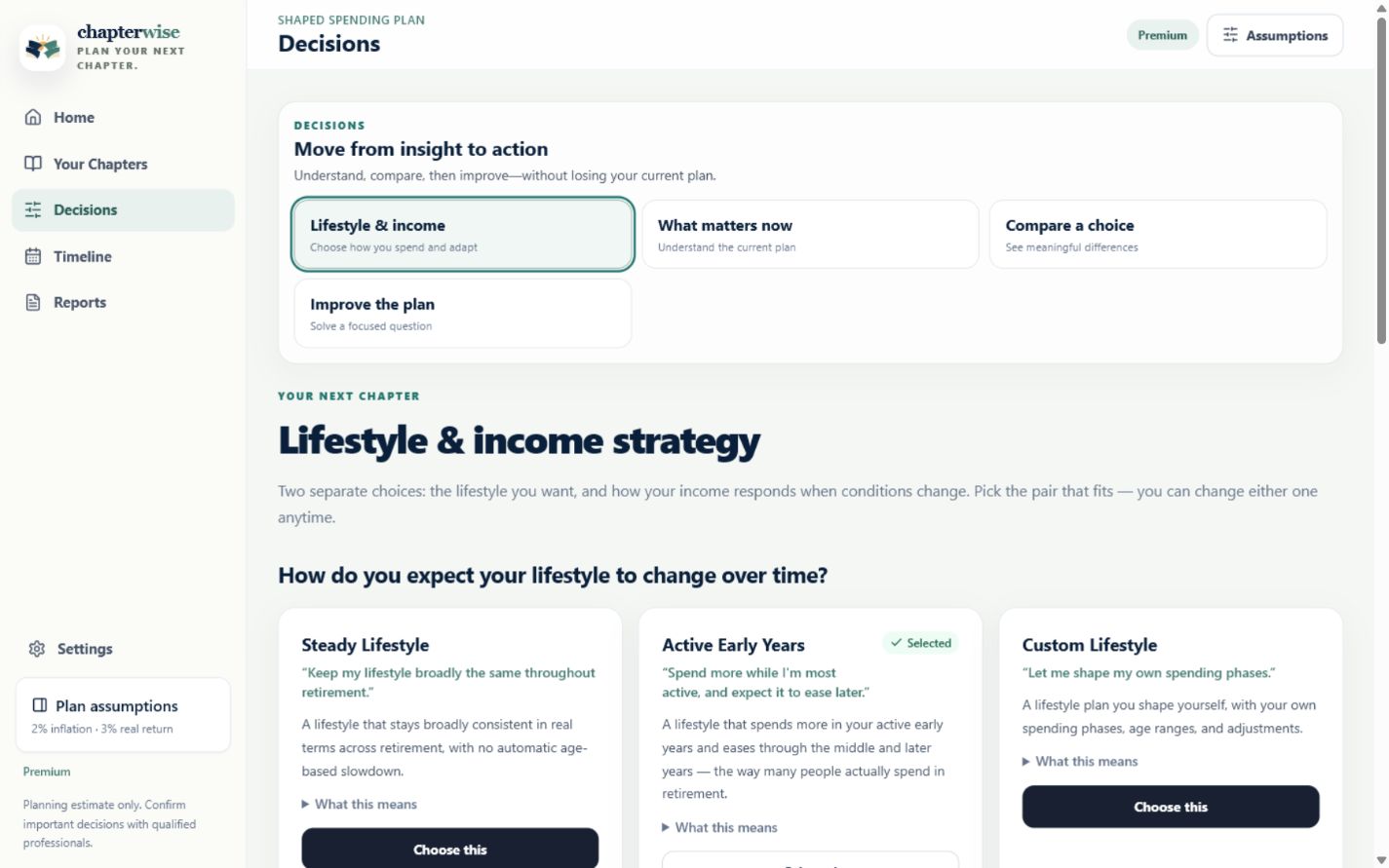
This directional preview reuses the same illustrative logic as the homepage. It is not a recommendation or a personalized projection.
A different kind of freedom
The appeal of a second act isn't really about the paycheck. It's about writing a chapter where work is chosen rather than required, on terms you actually get to set. For some people that looks like slowing down. For others it looks like finally speeding up toward something they'd been circling for years.
Either way, it's a legitimate next chapter, not a failure to fully retire, and it's worth planning for with the same care as any other part of the story.
This article is for general educational purposes and describes a common pattern in later-career planning. It isn't personalized financial or career advice.
Related chapters in this series
- Retiring From Something vs. Retiring To Something
- The Chapter Where You Get to Take Your Foot Off the Gas