 chapter
Chapterwise retirement guide
Retiring From Something vs. Retiring To Something
Most people plan what they're leaving behind at retirement. Fewer plan what they're retiring to. Here's why that distinction matters.

Ask most people why they're retiring, and the answer tends to be about what they're leaving. The commute. The stress. A job that's run its course. All fair reasons, and none of them wrong. But there's a quieter question underneath that one, and it matters more than it usually gets credit for: what are you retiring to?
Two different stories
Retiring from something is a story about relief. It's the chapter ending because you're ready for it to end. There's real value in that, and plenty of people arrive at retirement exhausted and simply needing the chapter to close.
Retiring to something is a different story entirely. It's not about escape. It's about a next chapter that already has a shape, travel, a project, more time with family, work that matters to you on different terms, whatever it is. The difference isn't subtle once you're actually living it. People who retire from something often spend the first months relieved and the following months restless, because relief isn't a plan. People who retire to something tend to land more steadily, because there's already a next page to turn to.
Why this distinction is worth sitting with before the date arrives
It's easy to spend years focused entirely on the financial side of "can I afford to retire" and never quite get around to the equally important question of "what will I actually be doing." The two questions deserve equal attention, because a fully funded retirement with no shape to fill it can be just as unsettling as an underfunded one.
You don't need a fully detailed answer years in advance. But it's worth asking the question honestly, more than once, as the date gets closer: if the job disappeared tomorrow, what would you be moving toward, not just away from?
A smaller first step
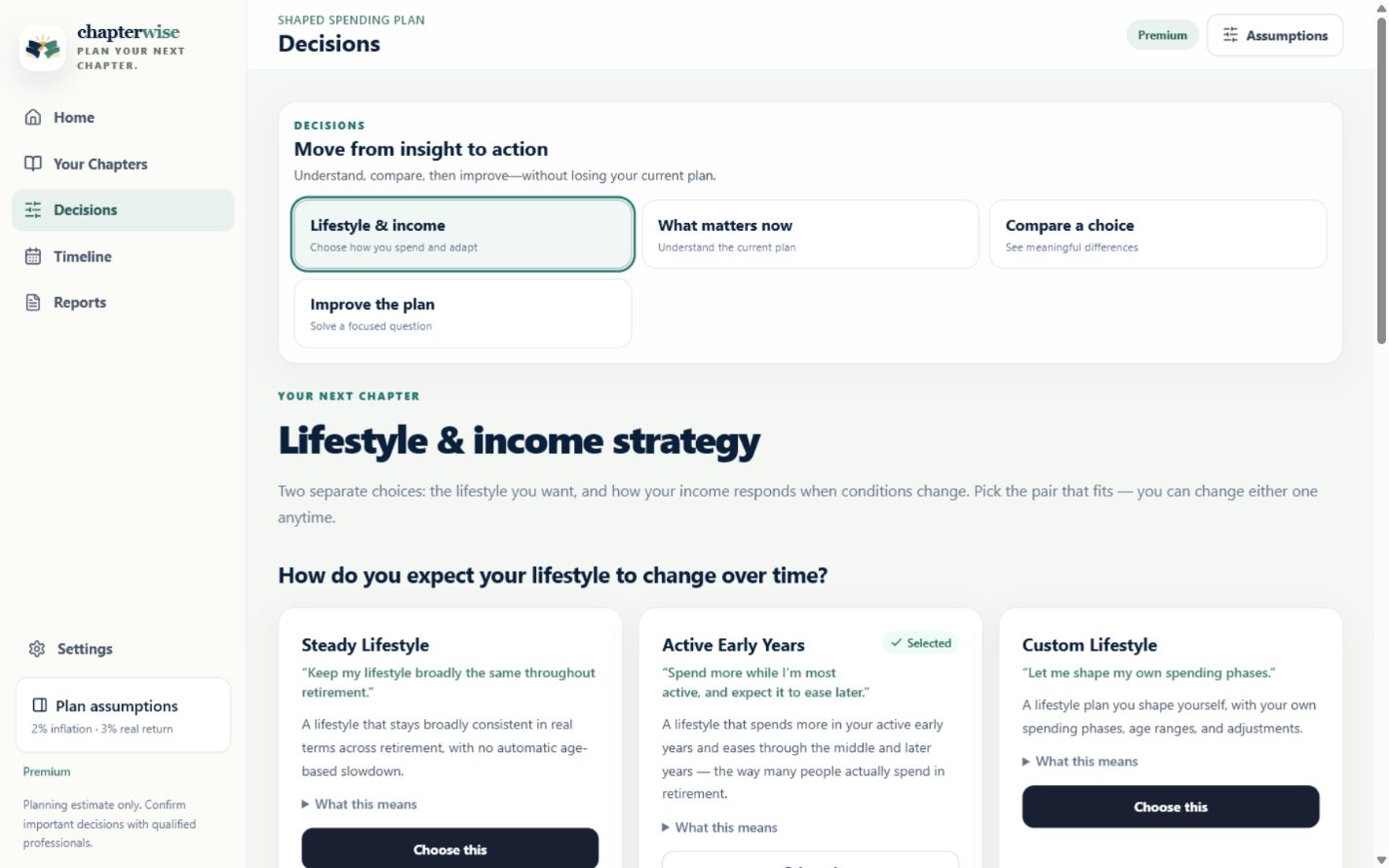
Try the decision before you sign up
This directional preview reuses the same illustrative logic as the homepage. It is not a recommendation or a personalized projection.
Writing the next chapter with a destination in mind
Both reasons to retire are valid, and most people carry a mix of both. But if you notice your own answer leans heavily toward relief and light on anything else, that's worth exploring before the last day of work arrives, not after. A chapter that starts with a clear "to" tends to read a lot better than one that only ever had a "from."
This article is for general educational purposes and reflects a common theme in retirement planning conversations. It isn't personalized financial or life-planning advice.