 chapter
Chapterwise retirement guide
The Account That Does Two Jobs at Once
Trying to save for a first home and retirement at once? Here's how the FHSA, TFSA, and RRSP work together in Canada, and which to fund first.
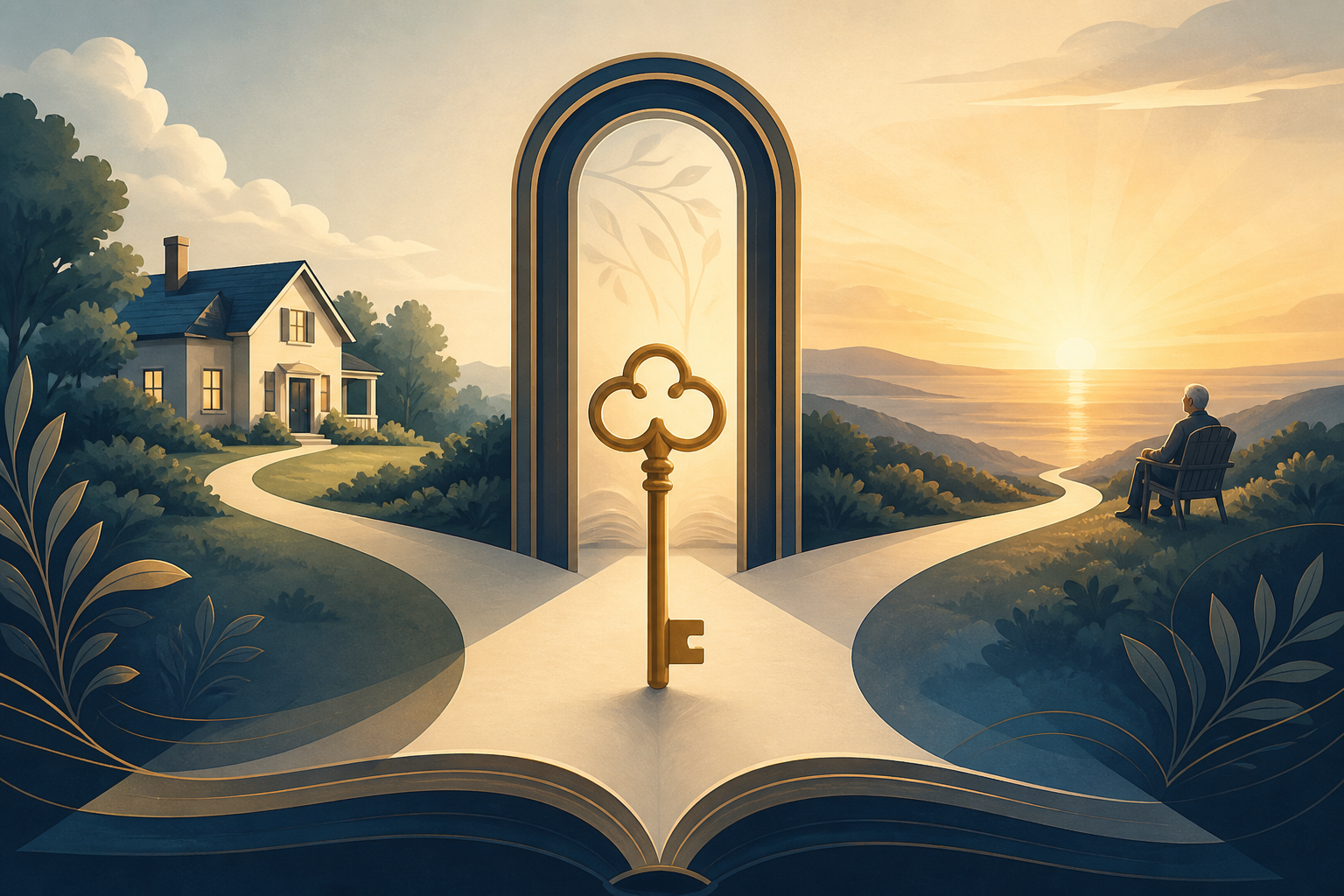
Somewhere in your 20s, a question shows up that feels like it shouldn't have to be a choice: do you save for a home, or do you save for retirement? For a long time in Canada, those were genuinely two separate lines of savings, competing for the same limited dollars. That's changed, and it's worth understanding how, because the sequencing matters more than most people realize when they're just starting out.
Two goals, three accounts
Canada now has three main registered accounts that matter for this decision, and each one plays a different role in the story.
The TFSA is the most flexible. Contributions come from money you've already paid tax on, growth inside the account is tax-free, and you can withdraw for any reason, any time, with no penalty. It's the account with no strings attached.
The RRSP is built for retirement specifically. Contributions reduce your taxable income now, growth is tax-deferred, and withdrawals are taxed later, ideally in retirement when your income, and your tax rate, are lower.
The FHSA, the newest of the three, was built to solve exactly the problem this chapter opens with. It combines a tax deduction on the way in, like an RRSP, with a completely tax-free withdrawal on the way out, like a TFSA, as long as the money goes toward a first home. It's the only account in Canada that offers both advantages at once, and it's specifically designed for the years when buying a first home and starting retirement savings feel like they're competing for the same dollars.
Why sequencing beats choosing
Here's the part that trips people up: it's not actually an either-or decision. It's a sequencing one.
If buying a first home is somewhere in your plans, even a loose someday plan, the FHSA is usually the first place new savings should go. You can contribute up to $8,000 a year, up to a lifetime limit of $40,000, and unused room carries forward. The tax deduction lowers what you owe this year, the growth inside is tax-free, and if you do buy a qualifying first home, the entire balance, including everything it's grown into, comes out without a cent of tax owed.
And here's the detail that resolves the tension entirely: if your plans change and a home purchase doesn't happen, the FHSA doesn't become a wasted account. Funds can be transferred into an RRSP without using up RRSP contribution room, meaning money set aside for a home that never gets bought simply becomes retirement savings instead, with the tax deduction you already claimed staying intact.
A smaller first step
Try the decision before you sign up
This directional preview reuses the same illustrative logic as the homepage. It is not a recommendation or a personalized projection.
What this actually means for a plan in your 20s
For someone in their 20s or early 30s trying to do the right thing with limited savings, a reasonable sequence looks something like this:
- Start the FHSA first, even with small, regular contributions, because the room only builds once the account is open and every year it's not open is unused room you can't get back.
- Use the TFSA for anything beyond that, or for savings you want to keep genuinely flexible, an emergency fund, a wedding, a career change.
- Bring the RRSP in more seriously once income grows, particularly once you're in a higher tax bracket where the deduction is worth more, or automatically if FHSA funds transfer over because a home purchase didn't happen.
None of this requires having your whole life figured out. It just requires opening the right account early enough that the years you're already saving in start counting toward both goals rather than neither.
A chapter that doesn't have to choose
The old framing, save for a house now, save for retirement later, made sense when the tools forced a choice. They don't anymore. The years you spend saving toward a first home can be the same years that start your retirement chapter, if the money goes into the account built to do both jobs at once.
This article is for general educational purposes and reflects FHSA, TFSA, and RRSP rules believed accurate as of 2026. It isn't personalized financial or tax advice; contribution limits and eligibility rules should be confirmed with the Canada Revenue Agency or a financial professional based on your own situation.