 chapter
Chapterwise retirement guide
Not Losing a Home, Writing a New Setting
Downsizing gets framed as a loss. Here's a different way to think about choosing a smaller home that actually fits your next chapter.

Downsizing gets talked about like a loss. The big house, the space for holidays, the rooms full of decades of memory, all of it framed as something you give up on the way to a smaller, simpler chapter. It's worth asking whether that's actually the right way to read it.
The house as a setting, not the story itself
Every chapter of a story needs a setting, and for a long time, that setting was a house built around a different life: growing kids, a bigger household, more square footage than any one season of life stays in forever. That house did its job well. It doesn't mean it's still the right setting for the chapter you're writing now.
A smaller home, a condo, a different city closer to family, none of these are lesser settings. They're simply the backdrop for a different part of the story, one with different needs: less upkeep, more flexibility, proximity to the people or things that matter most right now rather than the ones that mattered fifteen years ago.
The financial side of the setting change
Downsizing is also frequently a financial decision, and a significant one. Equity that's been sitting in a home for decades can become part of the income picture in retirement, whether through the sale itself, a smaller mortgage-free purchase, or simply lower ongoing costs freeing up more of your existing income for the rest of life. It's worth running these numbers early and honestly, not as an afterthought once the decision to move has already been made emotionally.
A smaller first step
Try the decision before you sign up
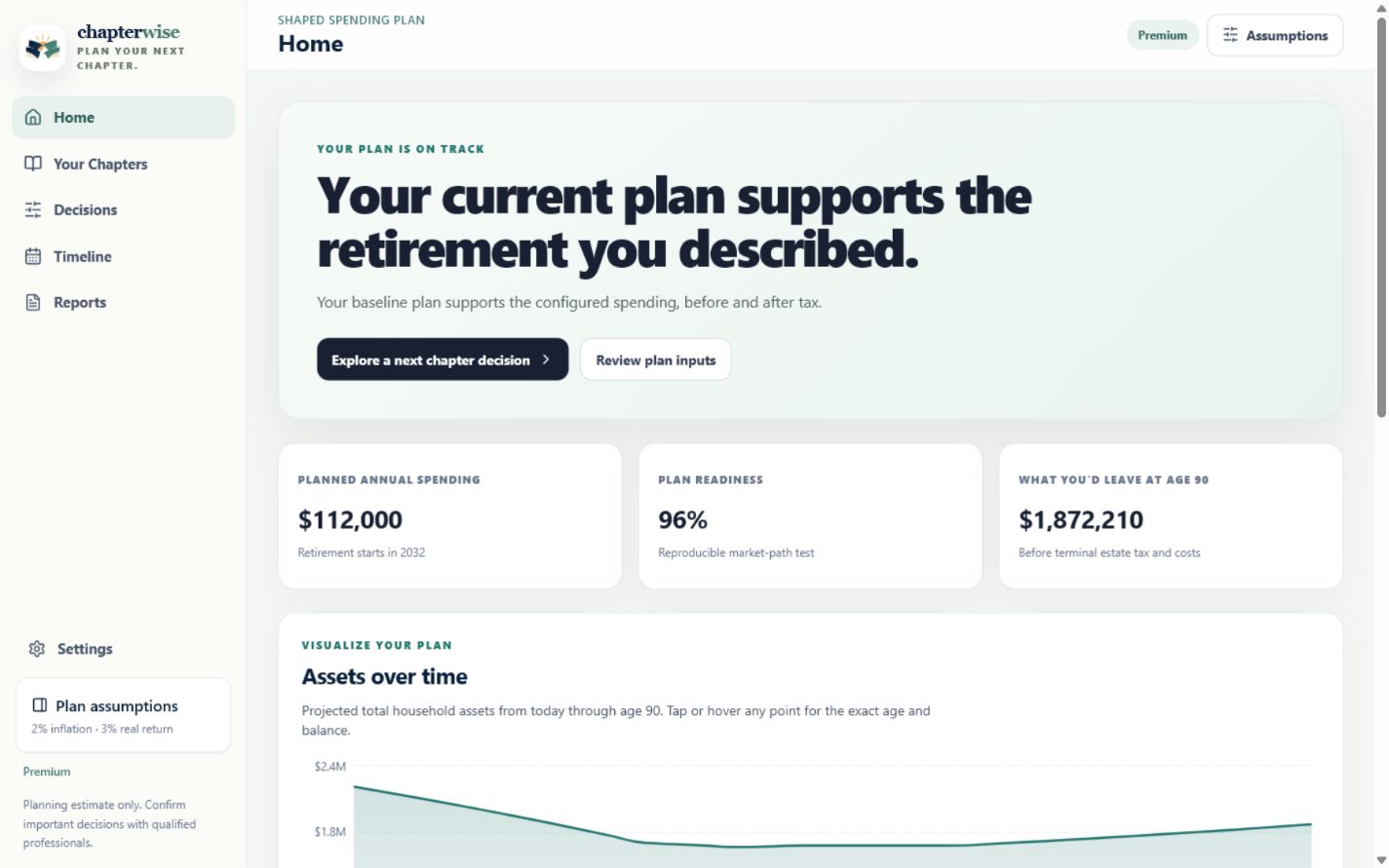
This directional preview reuses the same illustrative logic as the homepage. It is not a recommendation or a personalized projection.
Why the timing is personal
There's no universal right moment to downsize. Some people move the year they retire, wanting the new setting in place before the new chapter begins. Others stay for years afterward and only move once the house genuinely stops fitting the life being lived in it. Both are valid. What matters more than timing is honesty: is this house still serving the chapter you're actually in, or the one you used to be in?
A setting that fits the story
Downsizing well isn't about giving something up. It's about choosing a setting that actually fits where the story is headed, rather than staying in one built for a chapter that's already finished. That's not a smaller life. It's a better-fitted one.
This article is for general educational purposes and describes common considerations in retirement housing decisions. It isn't personalized financial or real estate advice.